
Loading Norman's Memorial Page...
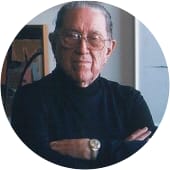
Norman Geske
–
Lincoln, Nebraska
Norman Geske, former director of the Sheldon Museum of Art and highly regarded arts leader, died Sept. 6 at Tabitha Hospice in Lincoln.Geske was born Oct. 31, 1915, in Sioux City, Iowa, grew up in Aberdeen, S. D., and graduated from high school in Minneapolis. He received a B.A. at the University of Minnesota, Minneapolis in 1938, an M.A. at the Institute of Fine Arts, New York University in 1953, and an honorary doctorate from Doane College, Crete, Neb., in 1969. He was drafted into the Army during World War II and participated in the Normandy invasion. Geske made an indelible mark on the visual arts locally, statewide and nationally. His numerous honors included Governor's Arts Awards in 1979 and 2004; the Distinguished Service Award from the University of Nebraska at Kearney in 1979; a commendation from the University of Nebraska Board of Regents in 1982; a Mayor's Arts Award, City of Lincoln, in 1987; the Sower's Award, Lincoln Community Foundation, in 1991, and the Nebraskaland Foundation Pioneer Award in 2004.Geske came to Lincoln in 1950 as assistant director of the University of Nebraska's University Art Galleries and was named its director in 1956. He was afforded an opportunity, rare among museum directors, of influencing the design of the Sheldon Memorial Art Gallery and of collaborating with the Nebraska Art Association (now Sheldon Art Association) in shaping the new museum's mission. He worked with renowned architect Philip Johnson to assure the building would meet the museum's needs. The Sheldon was dedicated in 1963, with the goal of building a nationally significant 20th-Century American art collection. Geske credited dedicated collectors of the area for helping in that pursuit. Under his leadership, the museum organized groundbreaking exhibitions, including a survey of American sculpture in 1970 that received wide acclaim.In 1968 Geske was invited to serve as commissioner for the American Pavilion at the prestigious Venice Biennale. The opening was an exciting occasion for a number of Nebraskans who traveled to Italy, but particularly joyous for Geske, who honeymooned with his new bride, Jane Pope Geske, director of the Nebraska Library Commission. The American exhibition of figurative works, which took a critical beating at the time, presaged the winding down of interest in reductive abstraction.In addition to other demands of the Sheldon, Geske took as a research subject the works of late 19th, early 20th-Century American painter, Ralph Albert Blakelock, eventually gaining recognition as the leading expert on the artist. During his career, Geske examined more than 2,000 paintings thought to be by Blakelock. No more than one-third was authentic. The archives relating to the artist are now housed at the University of Nebraska-Lincoln Center for Digital Research in the Humanities.Among Geske's proudest accomplishments was the establishment of the Sheldon Film Theater, now the Mary Riepma Ross Media Arts Center. Despite his commitment to the visual arts, Geske said he considered film the defining art medium of the 20th Century. He continued throughout his life to enjoy cinema and build understanding of significant films and the actors who made them memorable.Geske's penchant for innovation was evident in projects he spearheaded that made the state unique, such as the Nebraska I-80 Bicentennial Sculpture Project. Initiated by Geske and several leading arts advocates, ten artists were commissioned to create sculptures for placement in rest stops along 500 miles of Interstate 80. The project was controversial and involved public meetings in communities near the rest stops. Eventually the Nebraska Legislature approved the plan by a 25 or 14 vote and the project was dedicated in 1976 as a tribute to America's bicentennial.Geske felt Nebraska had an important artistic heritage and that works by its artists couldn't be properly showcased at the Sheldon. In 1979, the Legislature passed LB116, recognizing a small collection as the official state collection and in 1986 the Museum of Nebraska Art in Kearney opened its doors. Since that time, MONA has built a collection of more than 5,000 works and now serves as an important regional center for cultural activity. In 1983, Geske retired from his position as Sheldon's director, but remained a vital part of the arts community. He and his wife, Jane, both passionate readers, operated the Estuary, a bookstore in the Haymarket for several years.In 1994, through a deferred gift from Geske to the University of Nebraska Foundation, the UNL College of Fine and Performing Arts initiated the Norman and Jane Geske Lectureship in the History of the Arts. The series of annual lectures have included a broad range of authorities in the visual arts, architecture, theatre, dance and music.After retirement, Geske said he felt he "deserved" annual visits to Paris and New York, and he worked for many years at fulfilling that declaration. He lived in downtown Lincoln, where he enjoyed walking to the places he loved: the Sheldon Museum of Art, the Ross Media Arts Center, art galleries, performing arts centers, artists' studios and favorite restaurants.When asked his opinion, Geske offered the truth as he knew it, bluntly and without apology. He acknowledged that he could be cantankerous, claiming: "People are no damn good."But his circle of friends was wide and at genial moments he relented. "My years in Lincoln have been most fortunate," he said in a 2005 interview. "I've made a minimum of enemies."Although Geske's wife died in 1999, he leaves many individuals who benefited from his friendship.Memorials may be sent to the University of Nebraska Foundation. Services will be held at 4 pm, Monday, Sept. 22, at The Sheldon Museum of Art, 390 N. 12th, Street, Lincoln. ServiceMonday, September 22, 2014 4:00 PM 9/22/2014 4:00:00 PM The Sheldon Museum of Art 390 N. 12th Stree Lincoln, NE The Sheldon Museum of Art 390 N. 12th Stree Lincoln NE United States
Arrangements by Colonial Chapel Funeral Home